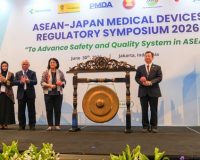

 Promotional coordination meetings in order to encourage investment in domestic medical device (alkes) production carried out on a hybrid basis
In order to accelerate the achievement of the independence of a competitive domestic pharmaceutical and medical device industry, the Directorate of Pharmaceutical Security and Medical Devices of the Directorate General of Pharmaceuticals and Medical Devices of the Ministry of Health, organized a promotional coordination meeting in order to encourage investment in the production of domestic medical devices (alkes).
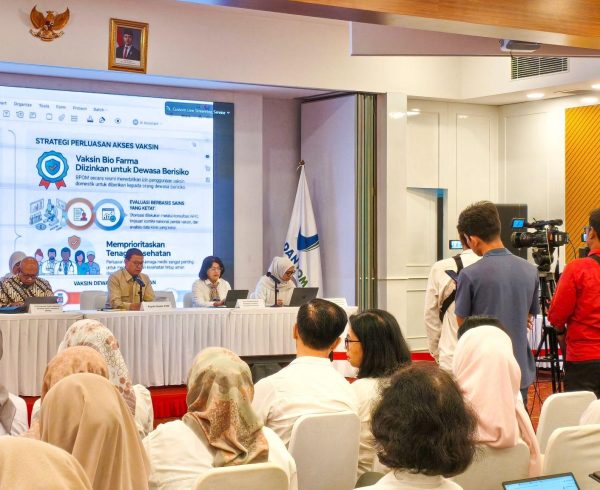
The hybrid meeting was attended by representatives from the Ministry of Health, the Ministry of Trade, the Ministry of Foreign Affairs, the Indonesian Embassy in Hanoi, the Indonesian Embassy in Bangkok, the Association of Indonesian Medical Device Manufacturers (ASPAKI), the Indonesian Medical Device and Laboratory Company Organization (GAKESLAB), and domestic medical device industry stakeholders.
This activity aims to see opportunities for expansion of domestic medical equipment products in the international market and to study the regulations required both from Indonesia and in export target countries. Especially on this occasion discussing the Southeast Asian market. This was conveyed by the Chairperson of the Working Team for Improving and Facilitating TKDN of Medical Devices and the Use of Domestic Medical Devices, Dit. Pharmaceutical Security and Medical Devices Lupi Trilaksono in Jakarta on Thursday (7/20).

"Through this activity, it is hoped that we can see the potential and opportunities for exporting medical equipment products, especially domestic products, as a material for compiling what interventions can be made by the government as a regulator and the private sector as medical equipment producers to develop and expand access to domestic medical equipment products abroad," he said.
In his remarks, Director of Pharmaceutical Security and Medical Devices Roy Himawan said that there was an increase in spending on domestic medical devices, this proves the government's efforts to make domestic medical equipment products used in health service facilities.
"So it is our duty together to improve the quality of domestic medical equipment so that it can compete with imported products, producers must continue to innovate including technology transfer from global companies that have new and innovative technologies," he said.
Furthermore, Himawan urged domestic medical equipment manufacturers not to stop working to create quality products and get international recognition such as CE mark, US FDA approval and WHO PQ certification which are product requirements for export scale.
"As a means of promoting domestic medical devices, domestic medical equipment manufacturers in 2022 and 2023 have participated in international events such as MEDICA which was held in Germany, Arab Health in Dubai, and recently held FIME in Florida, United States," Himawan explained.

Himawan also added that the main purpose of this activity is to promote domestic medical equipment products to be better known in the global market. As well as opening up opportunities for medical device exports and foreign investment to Indonesia in the field of medical device manufacturing.
This meeting is expected to provide insight for manufacturers who have the potential to export their products as a market expansion. "I hope we all learn how to easily export and coordinate with the Ministry of Trade, Ministry of Foreign Affairs to achieve the goal of increasing the market for domestic medical device products that contribute to national economic development," Himawan concluded.
On the same occasion, Masriati Lita from the Directorate of Southeast Asia, Ministry of Foreign Affairs said that ASEAN is the fifth largest economic region in the world with a Gross Domestic Product (GDP) per capita of USD 4,783 with very rapid economic growth of an average of 5.31 percent in 2022.
"The ASEAN health budget by 2025 is expected to increase from USD 420 billion to USD 740 billion. This is a potential for countries in Southeast Asia, most of these countries import medical equipment from abroad around 80-90 percent," he added.
By 2025 around 58 million people in Southeast Asia will be over the age of 65 and will increase to 123 million by 2050, the projected increase in Southeast Asia's population towards an aging society is driven by factors such as increasing life expectancy, decreasing mortality rates, and improved health care systems.
Increasing life expectancy is a potential market in Southeast Asia, as it will increase purchasing power and health spending.
"In 2022 it is estimated that the valuation of the Southeast Asian medical equipment market will reach USD 10.92 billion, this is a huge opportunity for industries engaged in manufacturing," he said.
Furthermore, Ance Maylani from the Indonesian Embassy in Hanoi conveyed the market opportunities for medical devices at the Vietnam MediPharm Expo 2023. "There are several exhibitions that we will participate in Vietnam and Thailand, participation in the exhibition is the final part of economic diplomacy efforts, we want to build the competitiveness of medical devices and pharmaceutical products, as well as build connectivity in the region for the medical device industry, in order to encourage the Southeast Asian market to be more growing," she said.

Ahmad Rama Aji Nasution from the Indonesian Embassy in Bangkok also said Thailand is a very potential market for Indonesian medical devices, 20 percent of its population is expected to be over 60 years old by 2022, and rising to 30 percent by 2035. This social change creates an urgent need for support services and facilities that cater to the elderly population.
"Large General Hospitals are expanding their facilities to cater to the aging population. As a result, there is a demand for related medical devices, products and services for elderly care," he said.
In addition, Ahmad Rama Aji also said that in 2028, the Thai government plans to turn Phuket into a world-class medical tourism center. Phuket plans to build an international medical tourism complex called Medical Plaza. By 2037 Thailand projects revenue from medical tourism of THB 150 Billion.
On this occasion Ganef Judawati Plt. Director of Export Development of Manufacturing Products of the Directorate General of PEN of the Ministry of Trade explained that Indonesia's medical device exports over the past 5 years have grown with a trend of 0.76 percent per year and the export value in 2022 reached USD 207.7 million while imports grew with a trend of 1.1 percent per year and in 2022 the value was recorded at USD 269.3 million.
Febie Yurita Poetri from ASPAKI also expressed her appreciation to all Ministries and Institutions for their support to the domestic medical equipment industry.
"In the past two years, the activities we have carried out have been extraordinary, not only at the national level but also at the international level, to bring the domestic health industry and increase awareness and branding that the Indonesian medical equipment industry has developed, we feel the benefits," said Febie.